

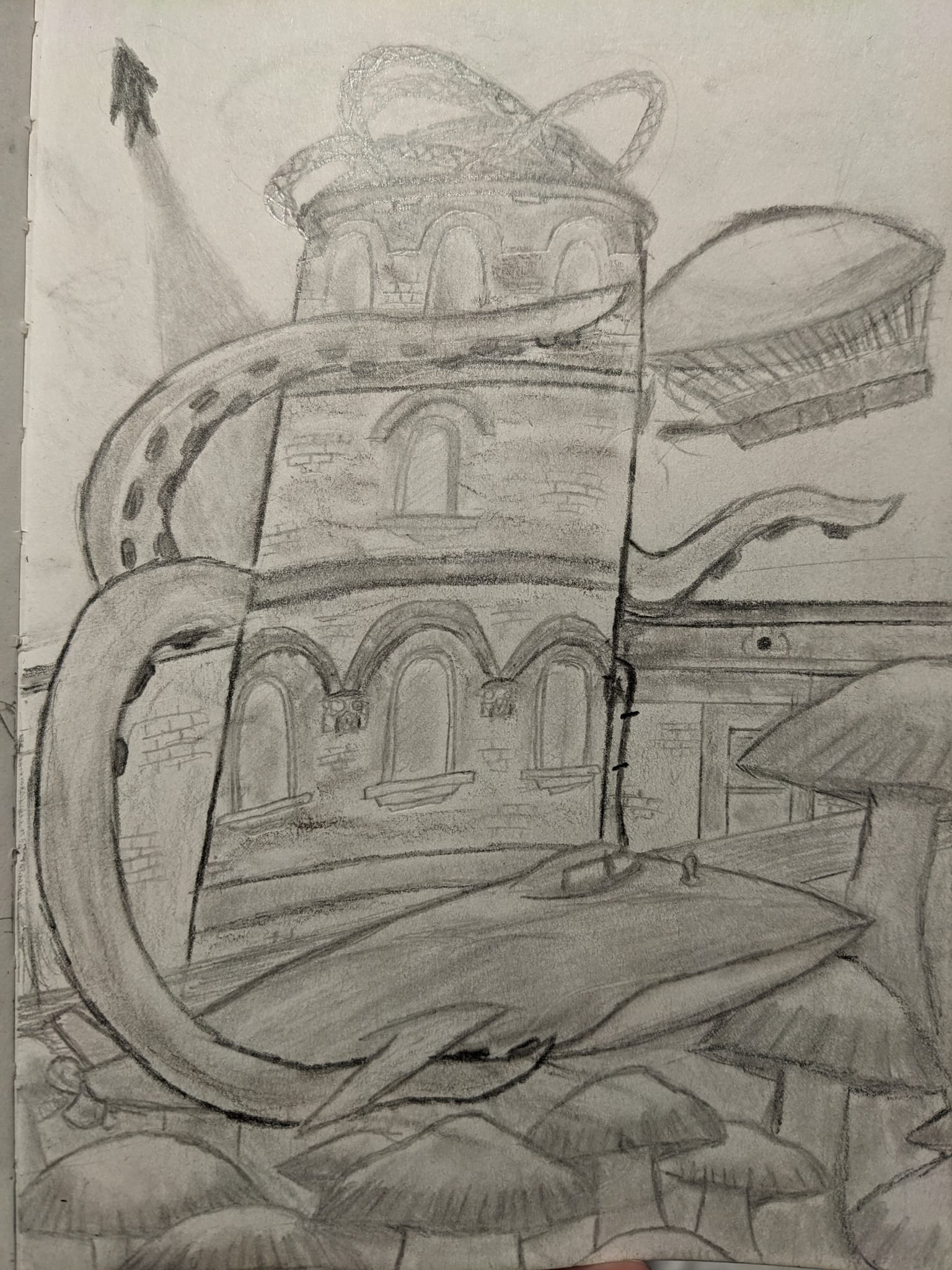
Last September, I travelled to Europe with my Dad. I wrote a bit about the holiday at the time (read about my Ayreon Adventure here) but today I want to reminisce about one particular highlight from the trip: Jules Verne’s house in Amiens, France.
We only spent one day in Amiens and visiting Jules Verne’s place was not initially part of my plan. I was aware it was there, but I’d intended to go out into the countryside seeing all the WWI sites and then check out the cathedral. We did both those things, visiting the Australian war dead at Villers-Bretonneux and taking in the amazing Amiens Cathedral, but at Dad’s suggestion we went to Jules Verne’s house and I am so glad we did.
I’ll try not to get too travel-bloggy here, as I know that is not what people click here for. Though if you are thinking of places to go in Europe, yeah, go to Amiens. I liked France a lot, especially once we got out of Paris, and with the Cathedral and all the WWI sites, Amiens is a history buff paradise. But this is a science fiction blog, so I’ll stick to talking about Jules Verne. Not just his house, but you know what? I do reviews, so how about I also share my thoughts on two of his most famous works too? I’m going to review two very well known Voyages Extraordinaries stories; Journey to the Centre of the Earth and Around the World in 80 Days. There are tons of adaptions of both of these stories, but I’ve managed to avoid all other versions, so am seeing them pretty much as intended. Except of course, I’m 150+ years in the future, reading English translations, and parts of these stories have already seeped into me from cultural osmosis. I’m sure there’s a few others who haven’t read a Jules Verne book out there, right?
Journey to the Centre of the Earth
I admit I read this one a while ago, but I enjoyed it a lot. Whilst it feels over a hundred years old due to the sheer outlandishness of the plot, it is still quite easy to read and no major values dissonance stands out. Journey to the Centre of the Earth feels like a prototype of the early planetary romance stories from the 30s and 40s, where an intrepid explorer sets out on some planet no-one has ever seen before and encounters a string of wonderous nature and frequent danger they must solve with their wits.
Not that Journey to the Centre of the Earth was the first of it’s kind. ‘Subterranean Fiction’ was it’s own genre back in the day. Wikipedia assures me it still is, but I feel that stories that assume there are ancient wonders underground have a completely different vibe to stories set in an underground nuclear fallout shelter. At least, that’s how I feel here in 2024 with my modern geological knowledge. Verne would probably disagree with me. To get back on topic though, there is one big difference between Journey to the Centre of the Earth and other subterranean fiction of the time. Verne’s underground adventure does not assume the Hollow Earth hypothesis. It feels weird not explaining more out of fear of spoiling a 160-year-old story, but I won’t explain anymore. I’ll just say, this story, despite seeming like a fantasy story in 2024, does adhere strongly to the scientific understanding of the time. Despite how much that understanding has moved on, this helps the story feel like a science fiction story as opposed to a fantasy. It has an SF attitude, which has helped it become a genre defining work.
Besides the historical significance of Journey to the Centre of the Earth, it’s also just a fun adventure story, even in 2024. The dinosaur fight is epic (and has spawned so many ‘lost dinosaur population’ stories), the mushroom forest was cool, and Axel getting lost in the dark caves was terrifying. This was the first Jules Verne story I read, and it made me curious to read more.

It occurs to me now that anyone here who hasn’t already read Journey to the Centre of the Earth and Around the World in 80 Days may not know exactly who Jules Verne is or why he is such a big deal. He was a French novelist, poet, and playwright, who is not just a big deal in France, but is also one of the most translated writers in history. His work always adhered to the scientific understanding of the day, though he and others denied that his work fit into the ‘scientific-marvelous’ genre that was emerging (Thanks Wikipedia.) Still, as I mentioned in the Journey to the Centre of the Earth review, he had that science-fiction vibe. I also bet he inspired a lot of the writers who would go on to create modern science fiction. He moved into a nice mansion in Amiens with his wife Honorine in 1871, which is the house I visited with my Dad in 2023.
The house is fascinating. Just standing outside and seeing the weird tower on top of it let me know I was in for something weird and wonderful. First thing you encounter once you enter is of course the ticket counter and gift shop, but beyond that you get thrown straight into a 19th century private mansion, which even without the Jules Verne connection is interesting. As you go further into the house though, it turns into a shrine to the power of Verne’s imagination and to the sense of wonder proto-science fiction and adventure stories of this era gave. I should mention that Dad and I just rocked up on the day and wandered around, but according to the Visit-Somme entry on the house, it is possible to book guided tours where staff dress up as characters from Verne’s Voyages Extraordinaries (link here) which I think would be amazing.
As you go further into he house, more Verne-related objects begin to appear. At first they were pretty typical historical items. Verne’s legal qualifications, original copies of his books and some letters. Then we get to the model ships, both conventional and airships. There was even a giant Nautilus model in one room almost as big as me. Verne did buy a boat at one point, and he loved to travel. All his travel stuff was out on display too.
The wow moment though had to be after we climbed up a few flights of stairs to step out on a ship’s bridge. It is absolutely crazy to come across something like this while exploring a mansion, and it really felt like we’d stepped into one of Verne’s extraordinary voyages.
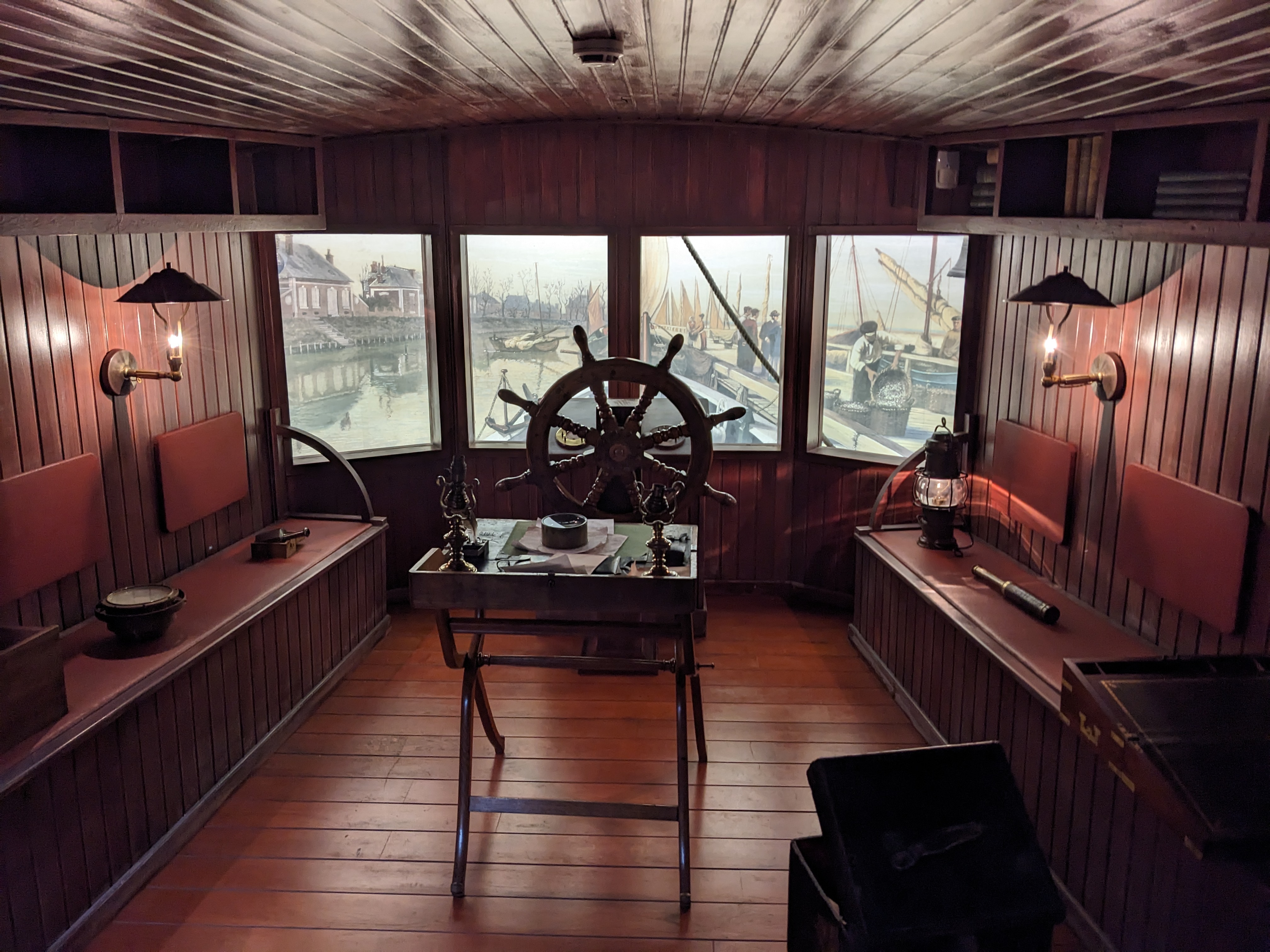
Now that we’ve reached Verne’s adventure room, seems like a good time to talk about one of his most famous adventures. I celebrated the anniversary of my visit to the Jules Verne House by reading Around the World in 80 Days. Let’s get into it.
Around the World in 80 Days
This adventure novel was published in 1872. I admit I haven’t read many 1870s adventure novels, but this feels like what I imagine a quintessential 19th adventure would be like. Super exciting, captures the sense of wonder from the age so well that we can feel it even in the 2020s. It also features 19th Centaury values. Good for its day in some aspects (the love interest is an Indian woman, though pale and English educated) and very bad in others (different races are at different levels.) How to navigate these things when reading older fiction is something everyone will have a different view of. The values dissonance for me was not too great to prevent me from pretending it was a shitty time appropriate narrative voice, but your milage may vary.
The plot is exactly as the title describes. Rich man Phineas Fogg wants to travel around the world in 80 days. He does so immediately after making a huge bet with some of his friends on a whim about whether or not such a thing is possible. He drags his new manservant, Passepartout – who was really looking forward to this brand new quiet, easy job – out with him on this adventure literally hours after he got hired. They leave so quickly and with so little prep time, that Passepartout forgets to turn off the gas in his room. Along the way Fix, a detective, mistakes Fogg for a bank robber and follows the pair, hoping to catch up to them with an arrest warrant. They also rescue Aouda, an unwilling Sati (widow sacrifice) whilst crossing India. Whilst the characters aren’t deep by any means, they are a lot of fun as players in this crazy adventure. Passepartout and Aouda quickly end up just rolling with Fogg’s craziness voluntarily, whilst Fix tries to be the only sane man in this situation, but depending on whether or not he has the warrant or jurisdiction wherever they happen to be, he switches between being an ally or an antagonist. I enjoyed the scenes between Fix and Passepartout a lot.
It’s just a fun, crazy adventure. Despite Fogg’s insistence on sticking to the itinerary, they go through so much dangerous stuff. This story also gives us a great look at the world of 1872. Like in Journey to the Centre of the Earth, Verne sticks closely to the understanding of the world at the time. He describes different places and cultures, correcting some common misconceptions (though, I do not know how accurate he actually is) and the itinerary is a route that could realistically be completed at the time, even though it had never been done before. As someone who loves travel, I enjoyed the itinerary planning part of this story, and I loved how early on Passepartout just had fun vibing in all these different places they stopped at. Though considering the circumstances of him exploring Japan, ‘vibing’ isn’t a good description of what Passepartout was going through, but we readers are still treated to a cool glimpse of 19th Century Japanese life.
One last bit of trivia, because it’s something that shocked me. There is no hot air balloon in the story. Every bit of art and promotional material for this book lied, they never get into a balloon.
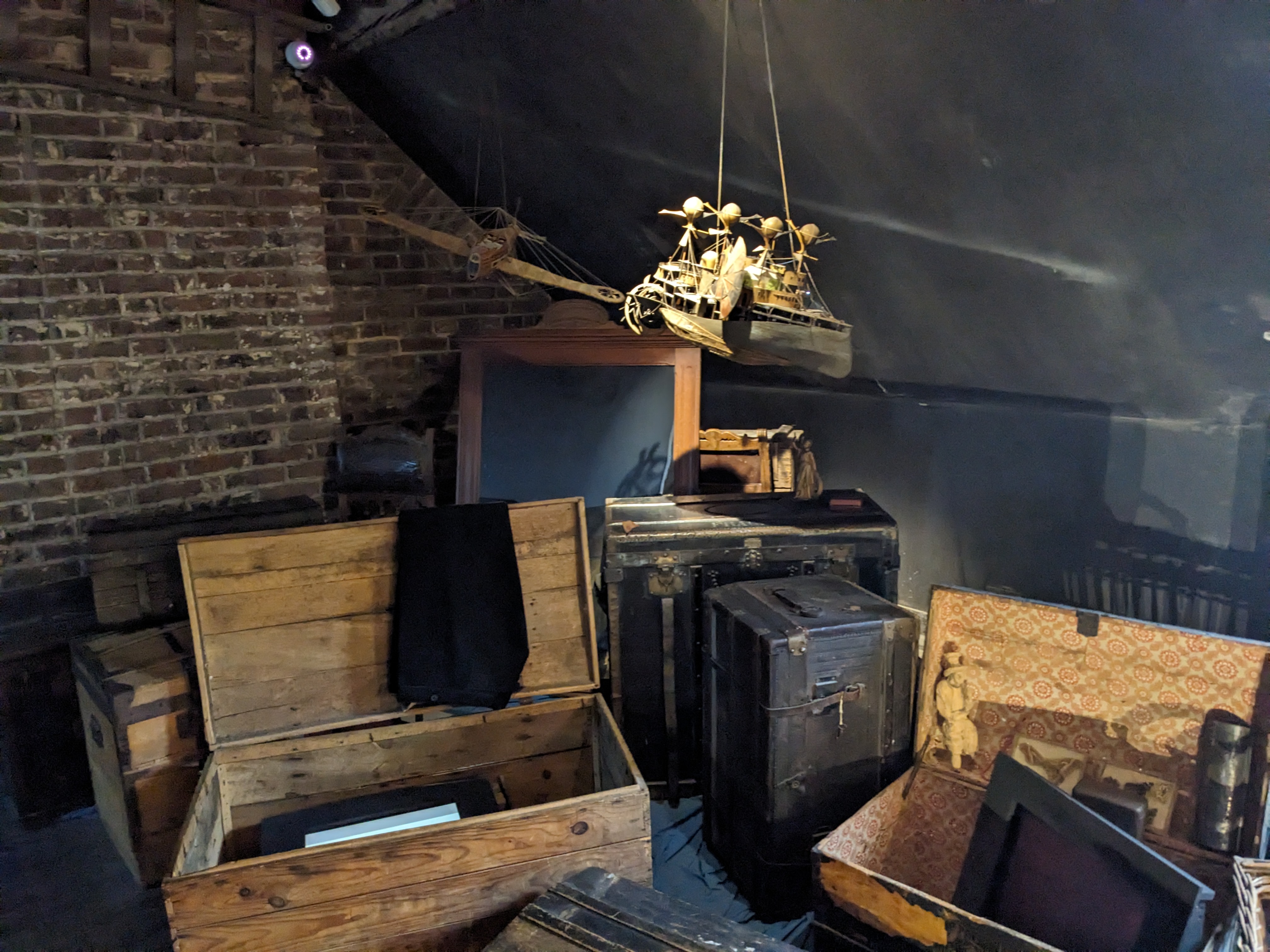
No matter how familiar you are with the works of Jules Verne, the house is absolutely fascinating. The house is a maze full of treasures, and even with my lack of familiarity with Verne, having read Journey to the Centre of the Earth and picking up references from other media, I understood a lot of what I was seeing. There is also plenty of English signage to explain all the items on display. My Dad, who is more familiar with Verne, was super excited about everything and listed the house as a trip highlight.
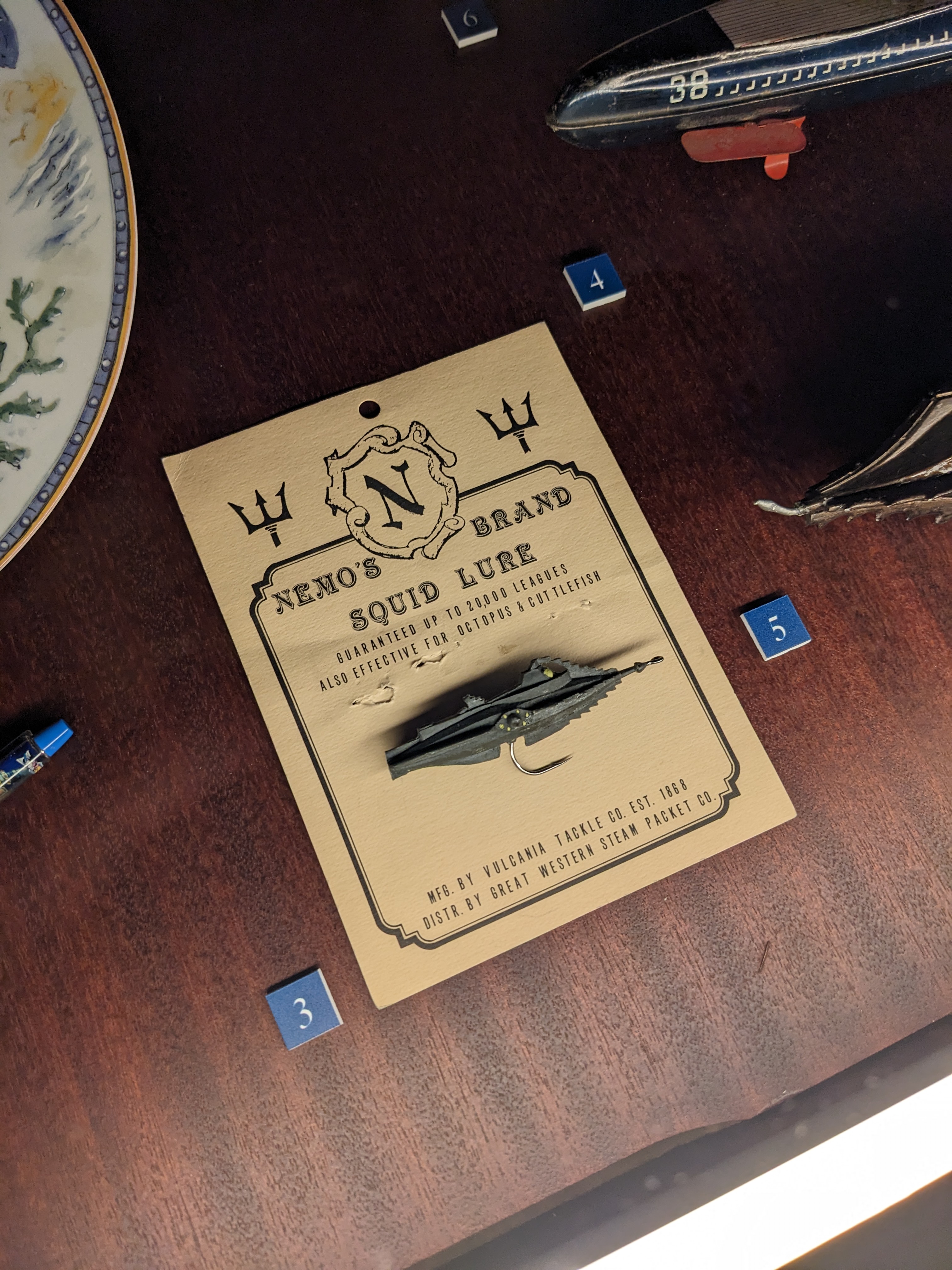
I’ve already mentioned the books and models, but my favourite things were those little items that show that despite the time period, humans are humans, and fans are fans. There was so much Voyages Extraordinaries merch on display. There were cards, plates, stationary, and even a 20,000 Leagues Under the Sea branded squid lure. It’s really cool to see all this stuff and realise that even 150 odd years ago people enjoyed fantastical stories and fictional characters so much that they’d go out and buy merch. It seems the desire to surround ourselves with reminders of our favourite fictional worlds is timeless.
Of course, Amiens is a little out of the way and not considered a must-see destination on any tours. So, is the Jules Verne House worth going all the way to Amiens by itself?
For me, the answer is no, though if you’re a huge fan and get a guided tour then maybe. Though to be fair, the Jules Verne house doesn’t have to be worth the trip by itself because it is located in a really great area with a lot to see and do. Being the main city in the Somme, there are a lot of historical sites in the area that are worth visiting. For Australians, Villers-Bretonneux is a very significant memorial worth a visit, and there are other important cemeteries around as well as a WWI museum in Albert. Besides the war related stuff, the cathedral is one of the most spectacular ones I have seen. I only had a day in the city but I wish I spent longer, as there is so much I didn’t get to see. Amiens is about a 45 minute train ride from Paris, so if you’re visiting France, I’d recommend popping into the city for an adventure. Possibly a fantastical adventure.
Now time to go read 20,000 League Beneath the Sea. Before I go, I want to shout out Project Gutenberg. This site is home to over 70,000 FREE ebooks that are in the public domain. It’s a great place to check out if you have an ebook reader and want to read old stories. Hell, you could read them on a web browser if you don’t have an ebook reader. I got all my Jules Verne books from there, and could not recommend the site enough.
– Jayde
 Jayde Holmes