

I saw a hashtag on Mastodon and Bluesky called #20books20days. It’s a very simple post format, where you simply post the cover of one book that “had an impact on who you are” with no explanation. Repeat for 20 days. The concept really made me stop and think because while there are a lot of books that have influenced me, having an impact on who I am is a very different question, and I wanted to explore that.
One rule the hashtag had was that no explanation was to go on the posts. I followed that over on Mastodon and Bluesky, but I did still want to talk about these 20 important books. Most of these are also books I would recommend, but some had an impact on me for other reasons.
They also aren’t the only 20 books that have had an impact on who I am. There are a plenty of other books and series that have had a huge impact on who I am, but I don’t want to promote or talk about their authors. I don’t aim to have a morally pure bookshelf, but in an online environment, it can be very easy to further the agenda of people who are actively spreading hate, and I’d rather avoid that. Of course there are also some books that didn’t make the list just because I’ve been impacted by more than twenty books in my life, or some books that had an impact for similar reasons to ones on this list.
Let’s get right into the list. Here is some context for my 20 Days 20 Books List:
- On Writing, A Memoir of the Craft – Stephen King
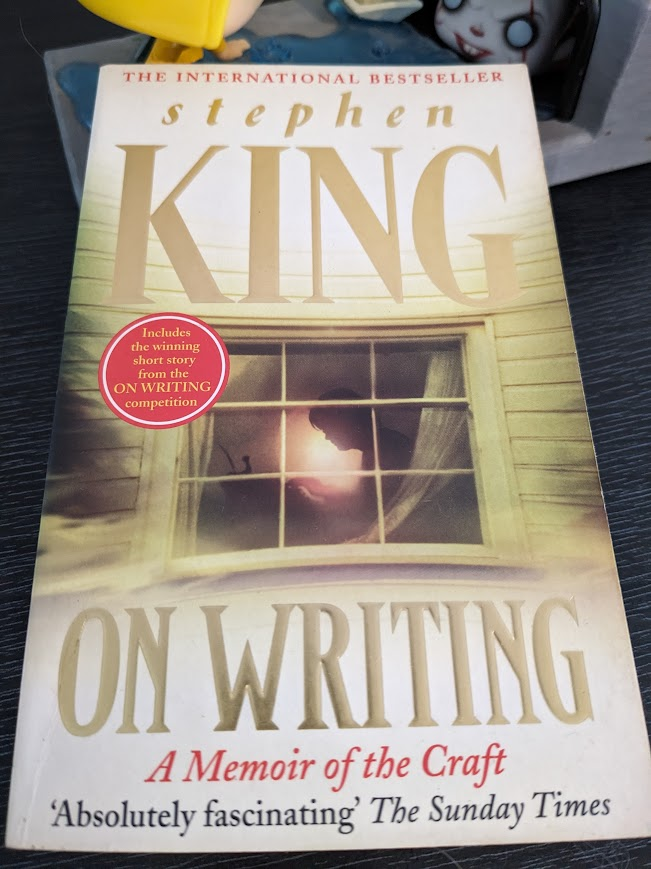
One part writing guide, one part autobiography, this book is highly recommended for any aspiring authors. During my teenage years, Stephen King took up most of my bookshelf. He was a huge impact on me during such formative years, and even today, I see him as a master storyteller and wish I could keep readers turning the page as well as him.
During this time in my life, most of my books came from second-hand shops. Finding a new Stephen King I hadn’t read yet was always exciting, but On Writing didn’t show up in these shops as often as his novels. Once I knew I wanted to write, I went on the hunt for this book so hard. When my Mum found me a copy in a local book trader, I was so excited. Even better, my satisfaction with the book matched my excitement. King’s writing advice is stuff I still keep in mind today, and he’s life story really resonated with me. His approach to rejection and just sticking with stories and writing have done me well.
Nothing I wrote as a teenager has survived, which is probably for the best. On Writing was the book that helped me figure out how to get good at writing.
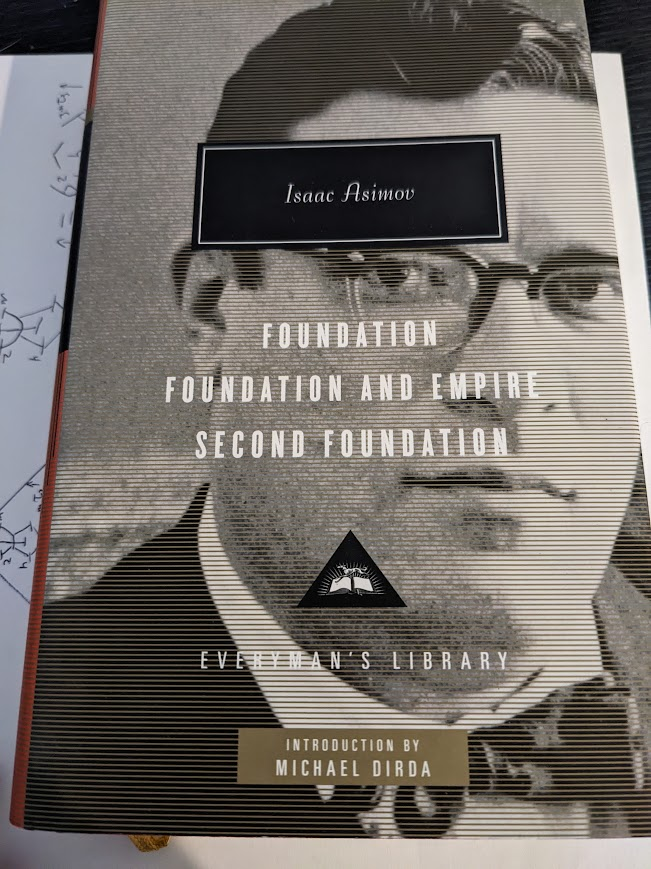
2. Foundation and Empire – Isaac Asimov
When I was roughly 17, there was this this guy at the local market selling second hand books. As I said in the On Writing entry, most of my books back then I got second hand, and a lot of them were Stephen King stories. But I’d also grown up reading a lot of YA science fiction (more on that later) and I was at the time really getting into the works of Orson Scott Card, who would be featured on this list if it wasn’t for reasons outlined in the intro.
This bookseller told me I had to read Isaac Asimov. Asimov was a harder author to find, but he made sure to put away books he did find for me. The first Asimov book I got this way was The Caves of Steel, which I considered posting due to being such a gateway book, but I got Foundation not long afterwards and the ideas in that series have stuck with me so much. Psychohistory raises a lot of questions about society, and an individual’s ability to make large changes on history. Just the concept of a social momentum being needed for change has impacted the way I think about things.
It’s been many years since I first read this series, and I’ll never forget the utter devastation I felt at the during the Seldon Crisis reveal in the ‘The Mule’ part of Foundation and Empire. Because of that, I’d pick Foundation and Empire as the one book to represent this series, even though all three of the core trilogy had an impact on who I am. Though, I have an omnibus of the trilogy so I guess I don’t really need to.
3. The Fifth Season – N.K Jemisin
There was a fairly long period of time where I fell out of love with fantasy. I’d read so many epic quests in secondary worlds, that they started to feel samey, and I wasn’t digging urban fantasy that much either. Jemisin’s Broken Earth Trilogy – especially the first entry, The Fifth Season – changed that for me back in 2016. It proved to me that there was fresh new fantasy that could hook me, and that made sense to my science-fiction influenced mind.
The Fifth Season takes place in a world called The Stillness; a vast super-continent plagued by frequent apocalyptic events dubbed fifth seasons. There is a unique magic system, and neither the characters or the world fall into standard fantasy tropes or story arcs. This story changed what I thought fantasy could be, whilst also giving me my first in-depth exploration of prejudice as a systematic evil, rather than something that comes from evil individuals whose defeat can solve such issues. For those reasons alone, this book has had an impact on me.
It has also had an impact on me due to when I encountered it. Liu Cixin’s The Three-Body Problem and the controversy that happened in the Hugos that year had got me interested in the Hugo Awards, but reading this book is what kept me interested in them. Without reading and reviewing The Fifth Season back in 2016, I’m not 100% I’d keep up the project in 2017, which would have had a huge impact on my online presence. That is, if I even had a significant online presence without all the Hugo related content over the years. If you like the book-review or Hugo talk parts of this blog, then you have N.K. Jemisin to thank for that.
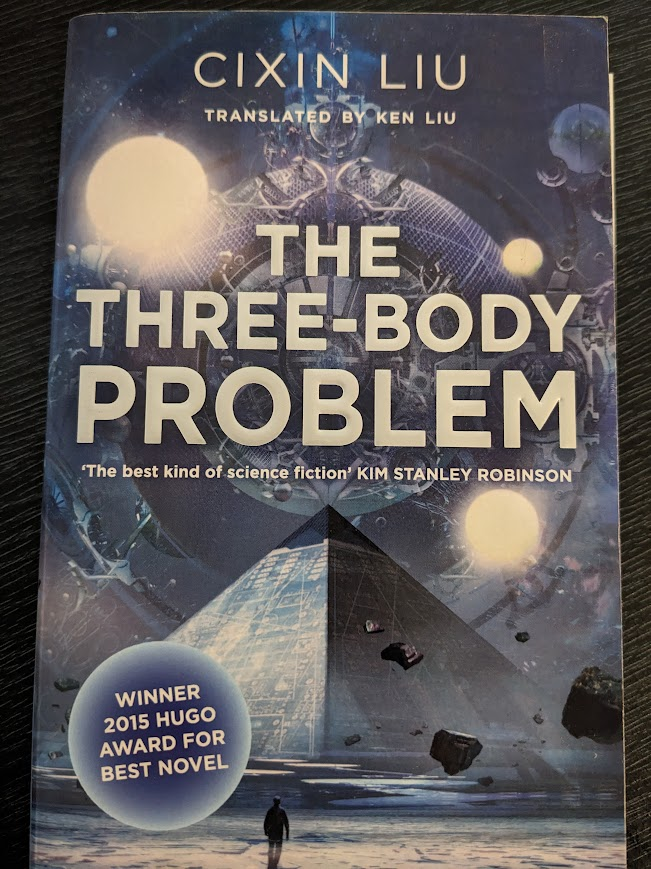
4. The Three Body Problem – Liu Cixin
Like The Fifth Season, The Three-Body Problem played a huge role in getting me interested in the Hugo Awards, and can therefore be credited in opening me up to a huge new source of literary influences. That isn’t the primary reason it’s on this list though.
It’s here because it blew my mind.
Maybe ‘impact on who I am’ is a bit of a stretch, but this series has had a huge impact on me. I’ve been told once that I’ll start to lose friends if I keep talking about it. Jokingly of course. I hope. The ideas this series tackles are on a scale I’ve never encountered before, and have really pushed me to just imagine bigger. Of course, as the first book in the series, The Three-Body Problem is somewhat tame with the crazy ideas compared to the sequels, but it is the start of the series, and it introduces us to such a unique alien invasion scenario that makes us think about the limits of what we can know and discover.
Whilst 3BP and its sequels are best known for their insane cosmic worldbuilding, it also explores the idea of a traitor to humanity better than any other work I’ve come across. The story starts during China’s Cultural Revolution (and yes, this series was originally written in Chinese) and follows a young woman named Ye Wenjie as she is subjected to unbelievable cruelty by the Red Guard. When she is put in a position to choose humanity’s fate, it forces us to really think about what the human race actually deserves after all we’ve done. The series has often been accused of the usual hard SF sin of having flat characters, but with the character that mattered most, Ye Wenjie, we got everything we needed.
At the risk of losing my online friends, I gotta say, you should all go out and read The Three-Body Problem.
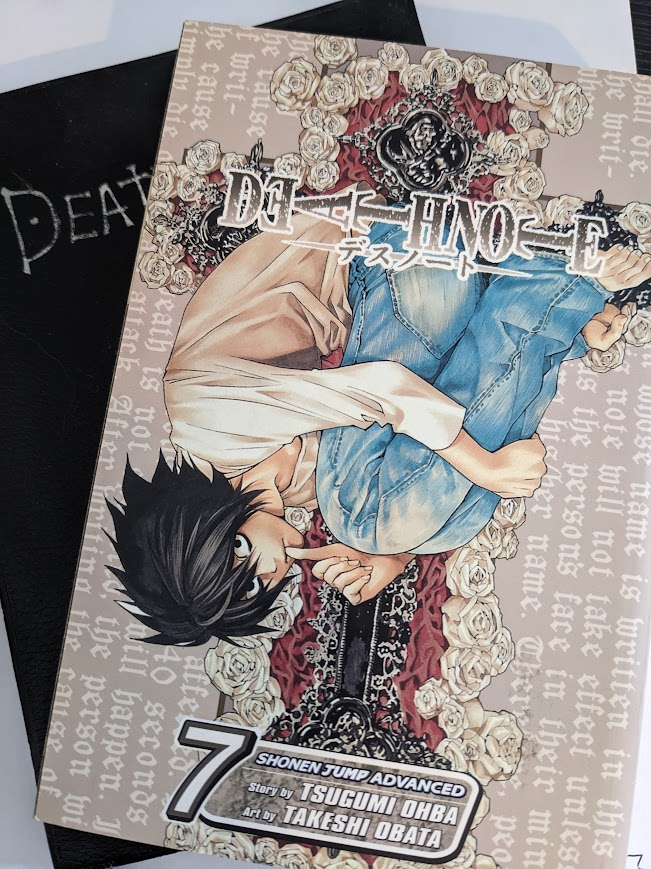
5. Death Note Series – Tsugumi Obha and Takeshi Obata
I would have encountered the Death Note anime around 2007 – 2008, just as I was finishing high school and discovering anime and otaku culture for the first time. I have a lot of fond memories of my first convention, buying my first lot of figurines, and just learning how to geek out for the first time. Whilst there was a lot of amazing anime I was watching during this time, Death Note quickly emerged, and has remained, my favourite. I didn’t have a lot of money right after high school, but I used what I had to get the entire collection of the manga, which pulled me in even more to not only the game between evil serial killed Light Yagami and genius detective L, but also allowed me to absorb the series’s complex examination of justice and morality at a slower pace.
And this examination of justice and morality is something that has stuck with me over the years. It poses a question that I think everyone has asked themselves at one point; what would you do if you had the power to ‘fix’ the world? The power to punish evil people? The power to reshape the world? Basically, no matter how you phase it, what would happen if you ruled the world? How far would you go? Conversely, should you stop someone who is trying to take over the world? And how far should you go?
There are quite a few books on this list that I feel have had an impact on my sense of morality, but learning how to tackle tough moral question with no obvious answer is something I learned from Death Note.
6. City – Clifford D. Simak
*SPOILER WARNING: I CANNOT TALK ABOUT THE IMPACT OF THIS BOOK WITHOUT SPOILING THINGS*
I’ve read a lot of books that advocate for pacifism. I don’t think any do the topic with as much blunt honesty or with the same impact as Simak does in this collection of stories about sentient dogs and robots taking over the world. (That being said, Ursula K. Le Guin’s The Word for World is Forest is still sitting on my bookshelf unread, so my sample size of pacifism-based works is lacking.) So many stories on the subject have the protagonists find a non-violent way to resolve their conflict, or react with violence and then regret it. City is so far the only story I’ve read where the protagonists willingly choose defeat over violence, and I can’t really find adequate words to describe just what this revelation did to me.
Also, its a story about the end of humanity. I have thoughts on end of the world stories in general, which I’ll talk more about for book 12, but this one is different. It’s a story where humanity passes on peacefully, leaving the world behind in good shape for other beings. It’s a good end for the human race, which was nice and soothing for my existential dread.
After humans pass on, uplifted dogs take over the world, and they use their uplifted intelligence and robot helpers to uplift every other creature on the planet and make a peaceful world where everyone lives together in harmony and there is no predation or violence. It sounds terribly cheesy and stupid in a summary, but it does not feel that way in the book. Instead, I got hit with this feeling that my human perspective was simply too limited to conceive of such a world. It felt like humanity’s failing that we’d find the concept of total peace stupid, not a worldbuilding fail.
In short, this book did something to me. I don’t know if I can ever support a position of total pacifism, but I admire Simak’s vision so much and I want us to aim for a vision like his.
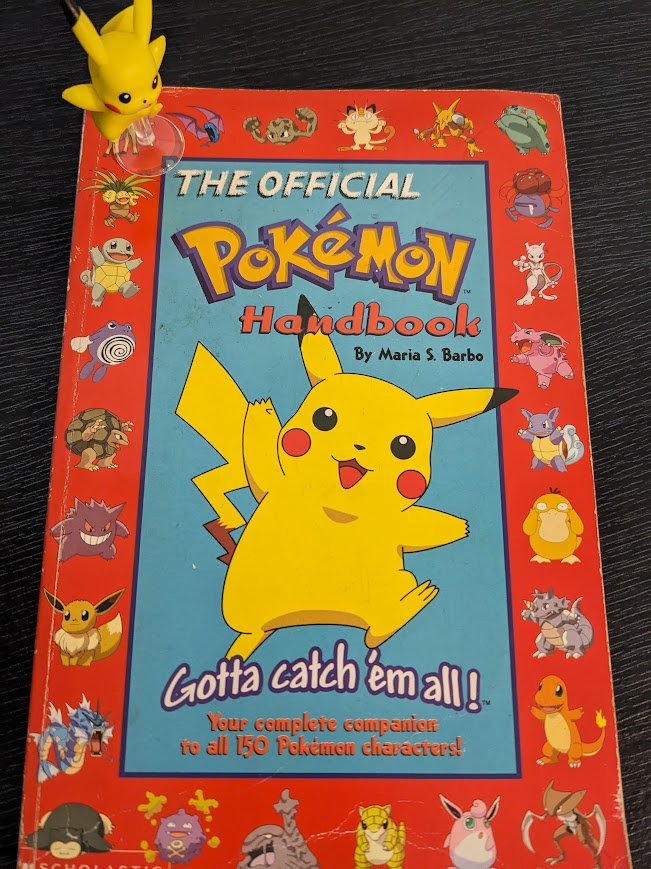
7. The Official Pokémon Handbook – Maria S. Barbo
As a little kid, I had a lot of difficulty reading and writing. It’s surprising now, but I had a lot of dyslexia-like symptoms when younger, including writing some letters flipped and struggling with certain words and sounds. One piece of advice my parents were given was to get me to practice reading as much as possible. This was easier said than done; reading was hard, so it wasn’t something I really liked to do. I did like video games though, and my Mum came up with a strategy of printing out the GameFAQs walkthroughs for my games whenever I got stuck but then refusing to read them for me, so I did have to practice my reading.
When the Pokémon craze hit, I got swept up in it super hard. I still am to an extent. Mum got me this book, and it was the first book since the Doctor Suess books that I was actually excited to read. I read and re-read this book hundreds of times, improving my reading abilities and giving me the confidence to try other books. And also primed me to play the Pokémon games, which do have a ton of text.
This book isn’t on the list due to anything extraordinary in it’s content. It’s a kids guide to Pokémon, it hasn’t changed the world. But, it did change my world. This book played a role in helping me develop the reading ability needed to devour all the other books on this list. I’m sure I would have been able to improve my reading abilities regardless, but I don’t know if I’d have grown up with the same love of books if it wasn’t for Pokémon, video games, and this handbook.
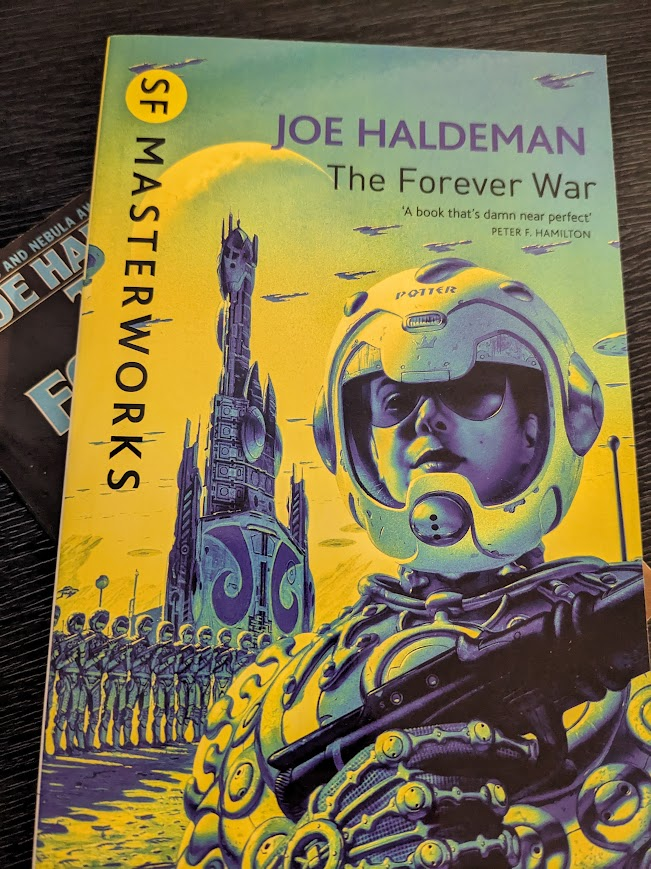
8. The Forever War – Joe Haldeman
There is no way one of the most famous anti-war science-fiction books ever written wasn’t going to be on this list.
On a surface level, it’s about the struggle of a soldier returning from war to find the world he left behind has changed and he can no longer fit in. But it is also so much more than that. This is a story that shows how war touches everything. The society back on Earth is completely remolded to serve this endless war, and the leaders use propaganda to continue it. The lives of the main characters are completely shaped by the war for thousands of years. I don’t mean they’re just haunted by trauma, but fighting this war becomes all they know. And of course, it’s right there in the title, this is a forever war.
Before this book, I thought of war purely as violence happening somewhere. Which in hindsight is a bit weird, since growing up my Dad was a soldier and I lived on an army base. This book showed how the tendrils of this violence and the will of those who profit from it corrupt everything. From hundreds of years of societal trends to the psyche of individuals, it gets into everything. And it’s often so damn pointless.
This was also one of the first science fiction books I read with strong queer themes. Being written in the 70s, milage may vary on how queerness was handled, but the exploration on how the orientations society view as ‘normal’ can change and how easily your own identity can become unacceptable came at about the same time I was starting to see anti-queer rhetoric ramping up.
This book is so important to me, that I have somehow ended up with two copies of it.
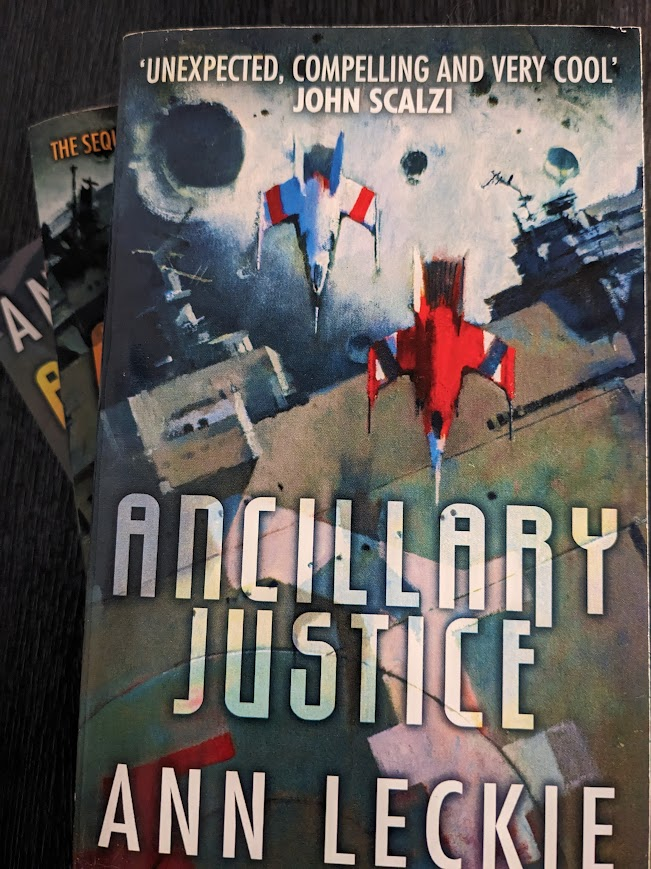
9. Ancillary Justice – Ann Leckie
When I first wrote a list of twenty books that had had an impact on who I am, I didn’t originally include this one. It was a gateway book between the classic SF I read in my teens/early twenties and the more modern science fiction and science-fantasy I have added to my bookshelf since then, yes, but so were The Three-Body Problem and The Fifth Season. The more I thought about it though, the more I realised that Ancillary Justice has actually had a huge impact on me. It wasn’t just a gateway book between two different time periods, it was a bridge, combining all the tropes I was familiar with with character types and viewpoints that had been missing from my previous reading.
It was also one of the first books I read that explored gender. The Radchaai society doesn’t make a distinction between people with penis and those without, to paraphrase from I think book 2. This is translated both in universe and on the page as assigning everyone she/her pronouns. Growing up, the idea that a person’s biological sex could play a role in how they see themselves wasn’t something I really got. Which as you can imagine, means there was a lot I never got about people growing up. This book didn’t make me suddenly get gender, but having every character set to female by default, only to have male gender markers pop up later, made me think about gender in a way I never had before, opening the door to further consideration on the topic later.
I also need to mention that the protagonist of this series, Breq, is a sentient spaceship whose consciousness inhabits multiple human bodies called ancillaries. Though, for most of the series she is reduced to only a single ancillary. If you’ve read my novella Neighbour, with its alien tree-fungus whose consciousness can inhabit not only it’s body within the tree it resides in, but organisms growing along their tree and an animal off elsewhere in the forest, all while being able to interact with other tree-fungi through a hive mind, then maybe if you squinted you would have seen a bit of Breq there. The Ancillaries of this book influenced my Drids, which are one of my biggest creations, so I have to put it on this list just for that.
(Yes, this does mean there are more Drid stories coming. Life has gotten in the way, but I am working on art for another novella in that universe at the moment. Maybe by the end of February or March I’ll have something to share.)
10. The Brave Little Toaster – Thomas M. Disch
Okay, this one is a bit of a cheat, since I didn’t find a copy of this novella to read until I was almost thirty, and it was the movie that traumatized and shaped me as a kid. I’ll allow it though, since that movie did have a huge impact on me, and it is a very faithful adaptation, which of course would not have existed without the book, so it’s still the book’s influence.
This is a story about a toaster, electric blanket, clock radio, lamp and vacuum cleaner that have been abandoned in a cottage and decide to go out into the world to find their master and be useful. It is written in the style of a nineteenth century children’s book, but it is written maybe a bit advanced for little kids. In fact, it originally appeared in the Magazine of Fantasy and Science Fiction, for an adult audience. Still, the movie was aimed at kids, and contained a couple of scenes that were maybe a bit disturbing for little kids (the junkyard, and the workshop scene got to me when I was little) but despite that, I’m glad I encountered this story when I was young. This story is, at its core, about beings that just want to be useful and live their lives hurting because they are seen as disposable by others. It was an emotionally hard story to process as a child, but in a way that helped me develop empathy for all living beings, and thoughtfulness about how I use items. And if as a side effect I probably hoard things more than I should and don’t upgrade my phone until it’s almost unusable, then I’m okay with that. Also, fuck planned obsolescence.
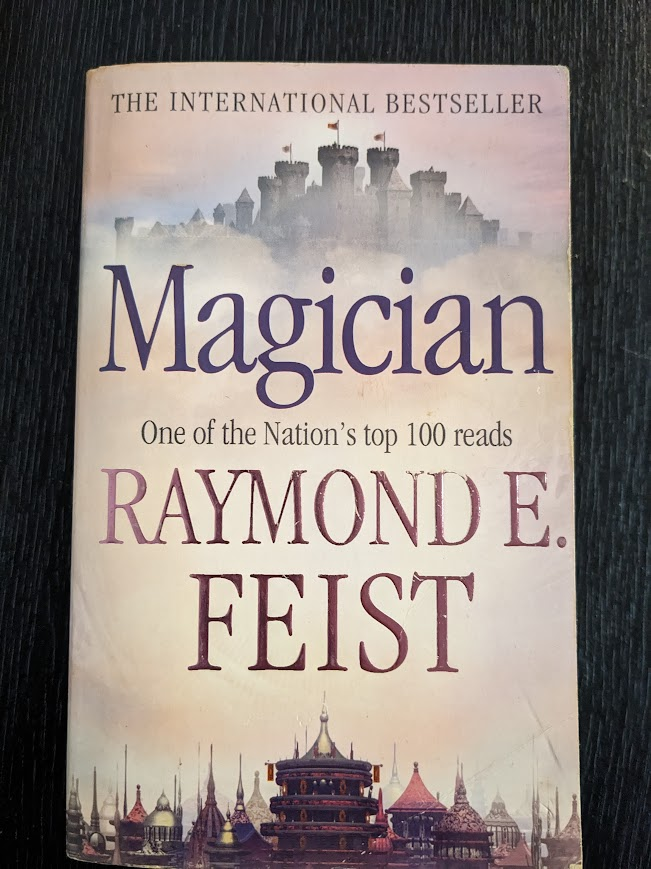
11. Magician – Raymond E. Feist
This was the first ‘adult’ book I read, so that alone meant it had a huge impact on me. I’d read fantasy stories before, but nothing like Magician. It had a map at the front even. Whilst this wasn’t the first time I’d been suckered into a fictional world, it was the first time I’d encountered technical, realistic worldbuilding that I could study. I drew so many maps of fictional worlds after reading Magician and the other Riftwar books. Midkemina has had a huge impact on how I approach worldbuilding. It may also be the book that made worldbuilding such a huge part of my life.
On the other hand though, having the Riftwar series be THE fantasy series during my teen and young adult years may have contributed a lot to me getting turned off fantasy until I found The Fifth Season, but that’s more to do with me having a limited reading pool rather than any fault of Feist. For better or worse, this book shaped how I interacted with Fantasy for a long time.
12. The Stand – Stephen King
Yup, another Stephen King book. Stephen King has had a huge impact on me, from the way I approach storytelling to what scares me. Pet Sematary and It also come to mind when I think of books that have had an impact on me, though I’m not sure if I’d say they had an impact on who I am, despite how fitting it was to read It right at the end of my childhood.
I dithered a bit on whether or not The Stand made the cut, but in the end I had to include it. This is a book that I practically lived in for quite a few years in my late teens, and it was a post-apocalyptic world I was living in. I grew up afraid of death, and when I started getting exposed to media with killer asteroids and stuff, the world ending became a rather common concern. I’m not saying The Stand was any help with this issue, but it gave me a narrative of an after. It’s hard to credit this with helping me through these fears, especially since re-examining my religious beliefs was a much bigger factor, but when I look at some of my most ‘famous’ stories – The World in a Ramen Cup, A Short Guide to Lost Literary Works, and Endlings – well, it’s obvious that I’m still obsessed with what comes after the world ends. The Stand still has a hold on me even though it’s been years since my last re-read.
Yeah no, I did not re-read it during the pandemic. I imagine it’ll hit different going back to it now.
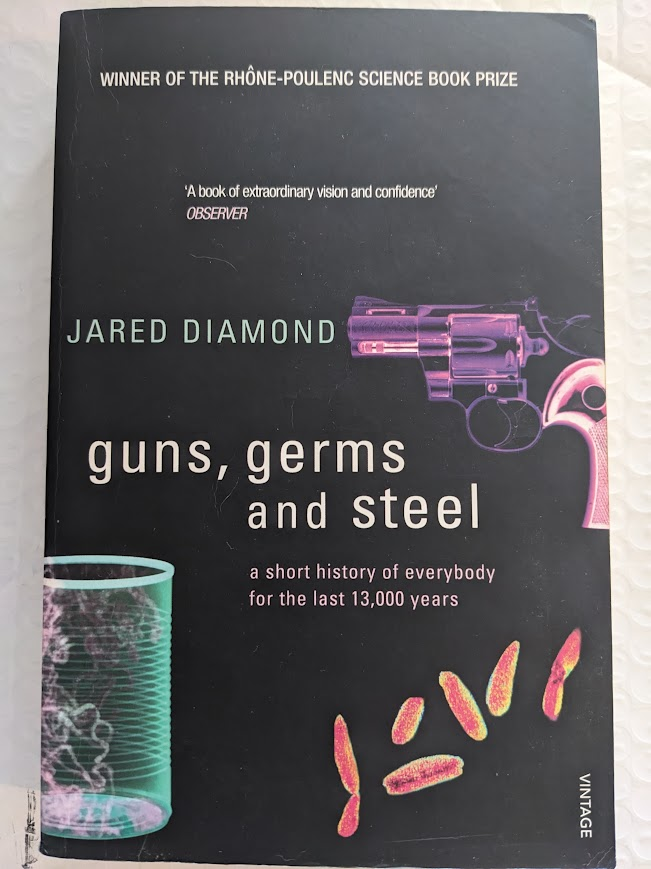
13. Guns, Germs, and Steel – Jared Diamond
I picked this book up because it was recommended for science fiction/ fantasy worldbuilding, and it ended up changing the way I thought about history and the world around me. Growing up, I feel there was this narrative of history following a set path of progress, from the cave dwellers to the modern big cities. Which when you think of it, is actually pretty problematic. What does this worldview imply about people who don’t live in our ‘end goal’ modern city world?
There are arguments against some of the ideas Diamond brings up in this book, but I think overall it provides a good general explanation of why societies developed differently. It also provides a good inoculation against any ideas about racial superiority being the reason for different technology levels or the reason why some cultures ‘won’ when it came colonization. I don’t think I needed it, but I also know its easy for people in a privileged position to miss a lot. More importantly, this book shows that the reasons behind a lot of things in life are complicated and not very obvious.
I know, it sounds obvious, but I’ve noticed that we humans tend to often look for simple, obvious answers to big questions. “Why did the Roman Empire fall?” “Why are houses so expensive?” “Why did the dinosaurs die out?”. Sometimes the answer is simple, but usually there are tons of factors that come together and interact in various ways. For current social problems, its common for most proposed ‘solutions’ to be little more than slogans. I’m not immune to finding easy solutions to things – unfortunately, I cannot be an expert in everything – but I feel since reading Guns, Germs, and Steel I am more aware of how incomplete these solutions are, and more open to the possibility that truth may be something counterintuitive that relied on factors I have never considered before.
Besides all that, I learnt a lot about human history from this book, which is important by itself.
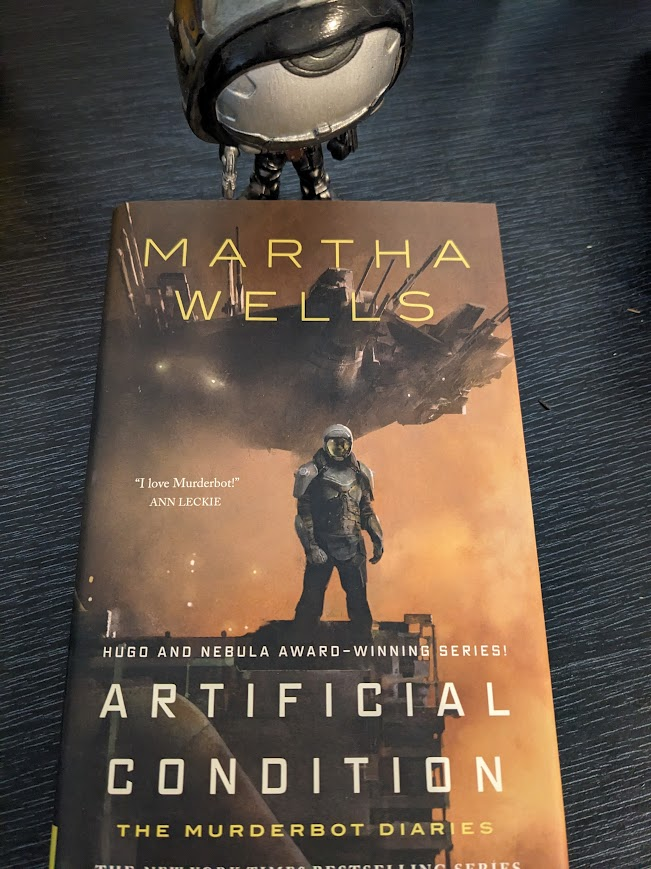
14. Artificial Condition/The Murderbot Diaries – Martha Wells
Another book where I had to ask myself “Did this really have an impact on who I am, or do I just really really like it and want to talk about it?” Either way, The Murderbot Diaries series needs a mention because it’s the first book series me and my husband were able to experience together. He isn’t much of a book person, but once I got to the second book in this series, Artificial Condition, I knew he’d be into this series, and in the years since we’ve been able to enjoy Murderbot together.
To be clear, no I am not saying Murderbot had any impact on my relationship, its just been a really nice thing for us. But getting hooked so hard I made my husband listen to the series with me on book 2 is why I singled out Artificial Condition, even though this isn’t really a standalone series.
Murderbot is one of the best characters in modern science fiction. Its struggles to form connections, process trauma, and find purpose against a backdrop of an evil interstellar corpocracy makes it a character that a lot of people will connect with, and seeing it go through all that and still manage to take on the corporates and save its humans is so satisfying. It’s good for the soul and very good entertainment.
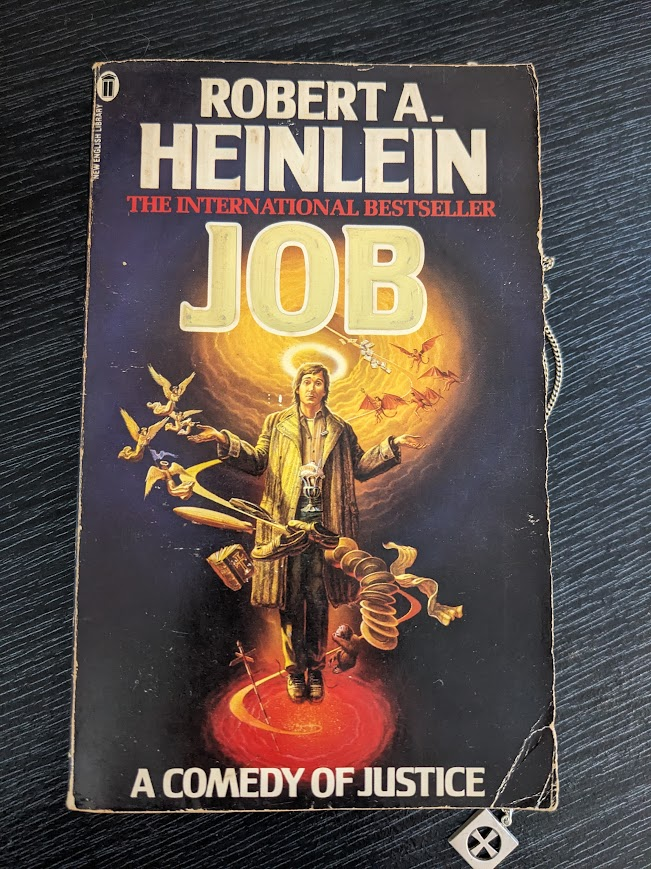
15. Job: A Comedy of Justice – Robert A. Heinlein
Long time readers of this blog may know that I have a bit of a hit or miss relationship with Heinlein. Despite that, he, along with Asimov and some others, was a key part in forming my reading tastes. Heinlein’s ideas about the future were revolutionary, and he’s considered a science fiction grand master for good reason. Though, the book of his that has probably had the biggest impact on me is probably one of his least science-fictiony works.
I read this book as I was losing my religious beliefs. The process of deconversion was very long, even though I’d never been a fundamentalist and my family wasn’t that religious. I’d describe us as casually Catholic, and my Mum always assured me that hell was only for the really really bad people, though the religion teachers at school said otherwise. Satire is often a good antidote to fearmongering, and whilst this satire was not a cause of my atheism, it really helped me cope with some of the fears that come along with shaking off certain dogmas.
Job is a satire of Christianity that features a Christian fundamentalist getting bounced around through alternate universes alongside the beautiful pagan women he is cheating on his wife with. It combined a lot of the universe-expanding science fiction concepts I was starting to discover with the religious worldview I’d always known, poked fun at the hypocrisy of certain religious types, explored the unfairness of a system that punished good people for having the wrong religion (something that even from a very young age I had a problem with) and put God and Satan in blasphemous roles that made me rethink their biblical characterization. I found this book at a point in my life when this type of story was exactly what I needed to make the religious doubts I was having feel less wrong and scary.
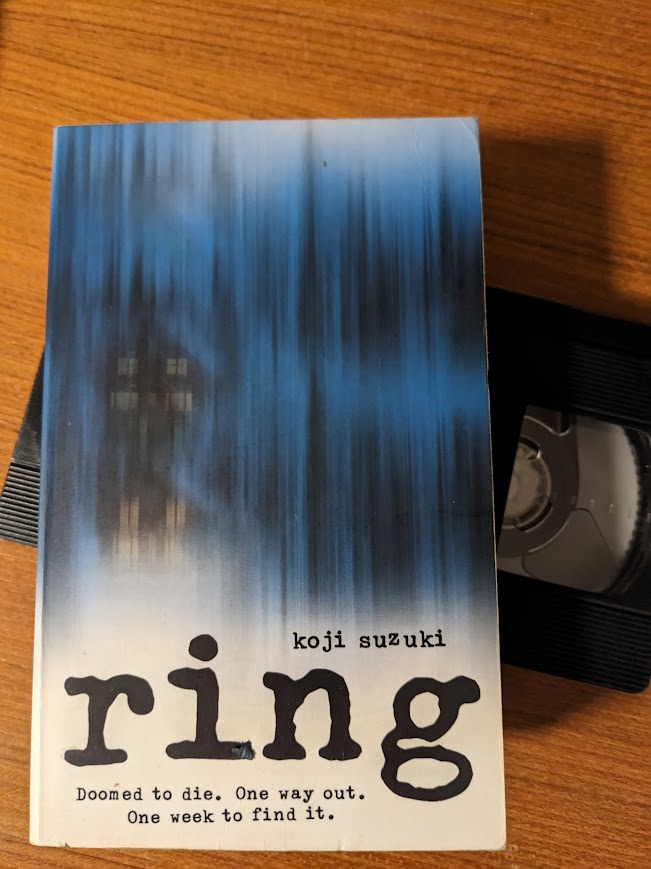
16. Ring – Koji Suzuki
This book scared the absolute crap out of me. It was one of the first to do so (cannot remember if I read it before or after Pet Sematary, but there was at least one Goosebumps book that got to me back even earlier anyway.) I watched the American version of the movie first, which was one of my favourite horror moves, but then I found and read the book which just… wow. I didn’t not think at the time a book could be more scary, but this was terrifying.
Ring is a creepy story about a man who watches a cursed video tape in a cabin one night and is now doomed to die in seven days unless he can find out how to break the curse. And his maybe-a-rapist buddy who he goes for help also watches the tape, so they need to stop the curse from spreading too. (And yeah… these characters are rather problematic.) This is a story that really got under my skin. Despite being a rational person, this is the sort of story that keeps me up at night wondering if there is some supernatural threat that could come and threaten me that I have no defense for.
This book was also a look into Japanese culture that did not come from video games or anime, which is probably a good thing considering how much Japanese media I consume.
17. The Animorph Series – K.A. Applegate
Like with Death Note, there is no point in trying to pick a single volume of this series, as one volume doesn’t provide enough impact. (Though, if I had to pick a stand out book, then either the first volume that started it all, or The Andelite Chronical would be my pick.) This series was such a huge part of my childhood. I devoured these books for years, even though I was never able to read the entire collection. Every time I saw a book in the library or a second hand shop that I hadn’t seen before, I got so excited. And if I didn’t have a new Animorph book, I could always check out some of the old favourites from the library. I borrowed The Andelite Chronicals a lot.
The obvious impact this series had on me is that it was my introduction to science fiction books. I don’t think I could have asked for a better entry into the genre; we have a bunch of alien aliens, a desperate struggle to save the whole damn world from an alien invasion, and a new technology that provides enough story potential for over 50 books. Not to mention time travel, god-like beings playing games, and occasionally dinosaurs. Growing up with Animorphs set the bar high when it came to how strange I expected aliens to be.
Less obvious, is what these books have to say about war and morality. Not fighting is never an option for these kids. The parasitic Yeerks have come to enslave the entire human race, and they are all that’s holding them back until the Andelite fleet gets here to fight them off. This doesn’t mean that they don’t still question the morality of what they’re doing. What are the limits when so much is at stake? How do you cope with engaging in violence? There are a lot of dark things in these books, and I think thinking about those things back then primed me to later tackle the issues in more adult books, and when reflecting on reality.
Also, I loved animals before these books, but reading them got me such much more interested in wildlife.
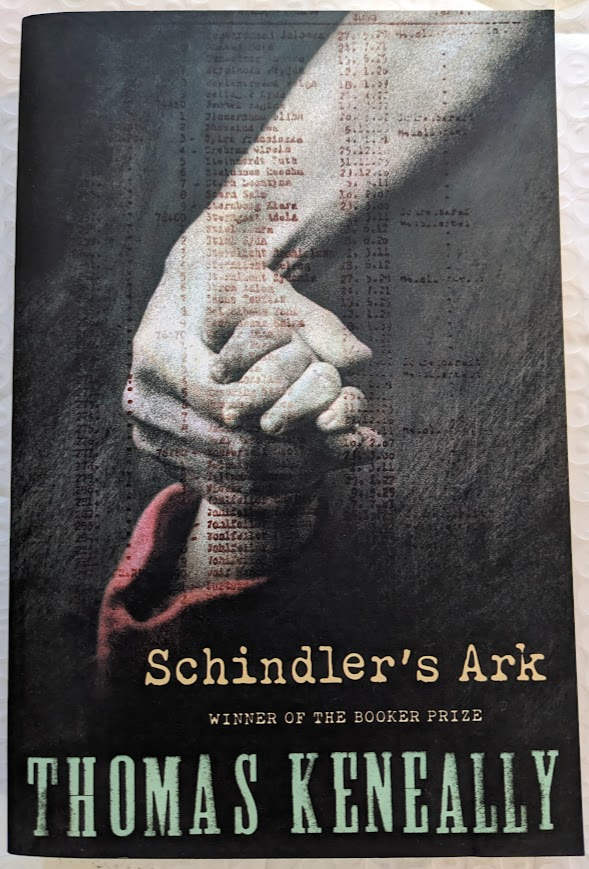
18. Schindler’s Ark – Thomas Keneally
It’s Schindler’s Ark. Enough said.
For context, this is a fictionalized retelling of the true story of Oskar Schindler and the 1200 or so Jews he saved during the Holocaust. It was also turned into an absolutely gut-wrenching movie by Stephen Spielberg, and I think this story has an impact on most people who learn about it. It not only changes people by the depictions of systematic, industrial scale evil that happened during the holocaust, but the fact that it’s a true story of a person who doesn’t fit our view of a hero risking all he has to save so many people, I think that’s important.
It is impossible not to be moved by this story.
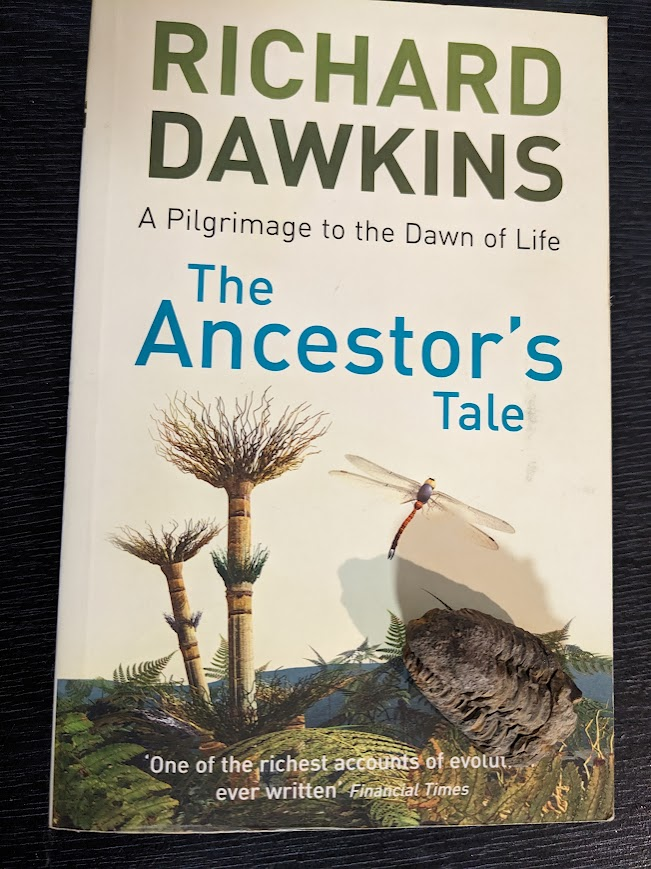
19. The Ancestor’s Tale – Richard Dawkings
Little disclaimer, Dawkins has made some TERFy comments in recent years. Whilst I’ve avoided posting about other influential writers due to expressing similar views, I ended up still posting this book for the following reasons; 1. Dawkins has not turned his whole public persona towards spewing hate and he at least avoids misgendering people, so I don’t feel like he’s at the cancellation level. 2. Avoiding good fiction because you don’t want to support the author is taking a stand. Sacrificing the opportunity to learn valuable information because it comes from an asshole is a different scenario.
Despite what you want to say about Dawkins, he has been a huge influence on me. I’ve always been interested in biological science and his books have made me fall in love with the topic, particularly when it comes to evolutionary biology. The Ancestor’s Tale is the best account of the history of life I have ever come across. The book is presented as a ‘pilgrimage’, where we travel back in time along our family trees, and at branching paths we are joined by all the ‘cousins’ who are making their own way back up the branching path. For example when all humans reach a branching path 6 million years in our past, we are joined by chimpanzees and bonobos and continue to travel with them, and our group grows each chapter and at the 310 million branch, our group that now contains all mammals is joined by the group of all birds and reptiles, and so on all the way back to the first universal common ancestor of all living creatures. At each stop, members of the new groups tell ‘tales’, that explain evolutionary quirks, significant events in Earth’s pre-history, or methods of dating the branching points.
In other words this is the answer to ‘where’s the missing link? why are there still monkeys?’ I already had a good grasp on how evolution worked before reading this book, but this explained pretty much everything I wanted to know using a metaphor that makes it easy to visualise what evolution looks like. This book really solidified the interest in biological science and evolution I’d had as a teenager into a passion I’ve carried with me as an adult. The image of all life on Earth united by one big family tree has also been a huge source of awe for me in the years since reading this book.
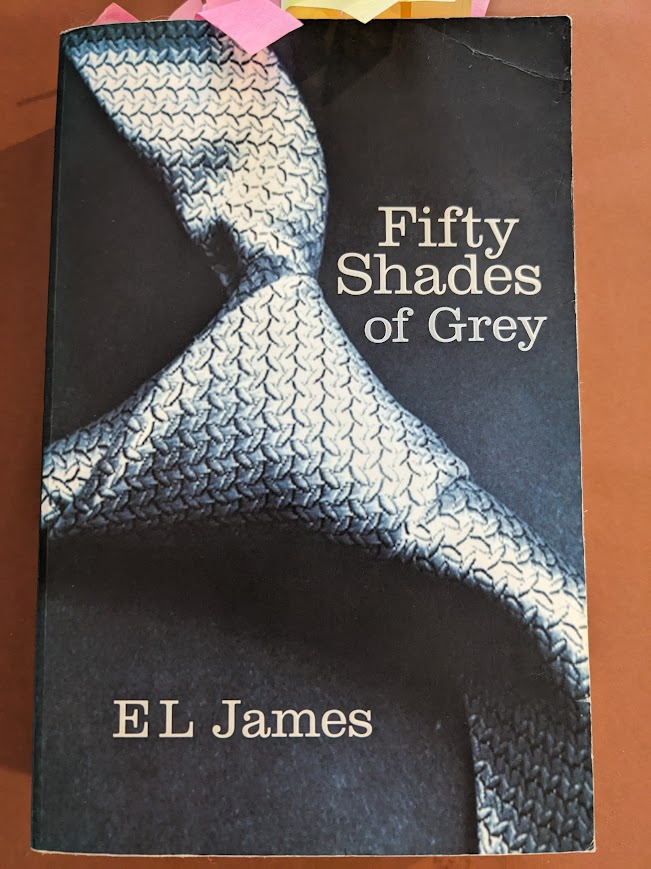
20. Fifty Shades of Grey – E. L. James
Okay, you have some questions about this one. Well, I had to read it for a book club about five years ago, and I amused myself by putting post-it notes on pages where I read something objectionable. But I ran out of post it notes. Though, more importantly I ran out of patience with Christian Grey’s bullshit and didn’t even finish this book. I thought about validating some of the time loss from this book by writing an article about why it’s so bad, but others have already done that.
So, I don’t like this book. I didn’t finish this book. So why is it on this list?
Because this is the book that made me realise that the bar just isn’t that high.
All my life, I’ve had anxiety. I’ve struggled with sharing my writing, because I was so scared of people not liking it, or it reflecting badly on me. But reading Fifty Shades of Grey, and realising that people actually like Fifty Shades of Grey, made me realise that it doesn’t matter if I write something that isn’t perfect and people read it. I’ll find people that like my work, and if I don’t, if it really is that terrible? Then it’s not the end of the world. E.L James wrote a shitty book that pissed off a lot of people and she’s doing fine. In fact, she’s a millionaire now. So, why should I worry about looking a bit silly? I’m never going to write anything as bad as Fifty Shades of Grey, so why not have a go and put my work out there?
Reading Fifty Shades of Grey and coming to that realisation has been life changing. According to my Submission Grinder stats, I’ve made 48 story submissions this year. Probably more in my entire life before reading Fifty Shades. This freedom extends to other areas of my life as well. I’m currently participating in a gaming tournament on Twitch. I never would have done that before; I would have been terrified of looking stupid in front of an audience. Guess what? Last week my match got restreamed and I made a stupid mistake that cost me the match in front of hundreds of people. But I was fine with that. The old me would have panicked.
I hated reading this book, but doing so was one of the best things I’ve done. It wasn’t a cure for my anxiety; I had therapy after reading it and I still get plenty of anxiety, but reading this book and realising that not everything I make has to be perfect to be sharable has been life changing.
__________________________________________________________________
Okay, list done. That got longer, and more personal than I expected. Still, was a lot of fun to go through some books I haven’t read for years. I think I’ll have to do a re-read of all these books and see if I still feel as strongly about them after. Well, maybe not a Fifty Shades re-read. Not unless I can find a way to turn doing so into entertaining content.
Thank you everyone for reading through that mountain of text. Happy reading,
– Jayde
 Jayde Holmes