


Yay, got another bingo on my card, so here’s some reviews. This is a really varied group of books, so this should be an interesting post. For more information on my 2026 Book Bingo Card, Click HERE.
_________________________________________________
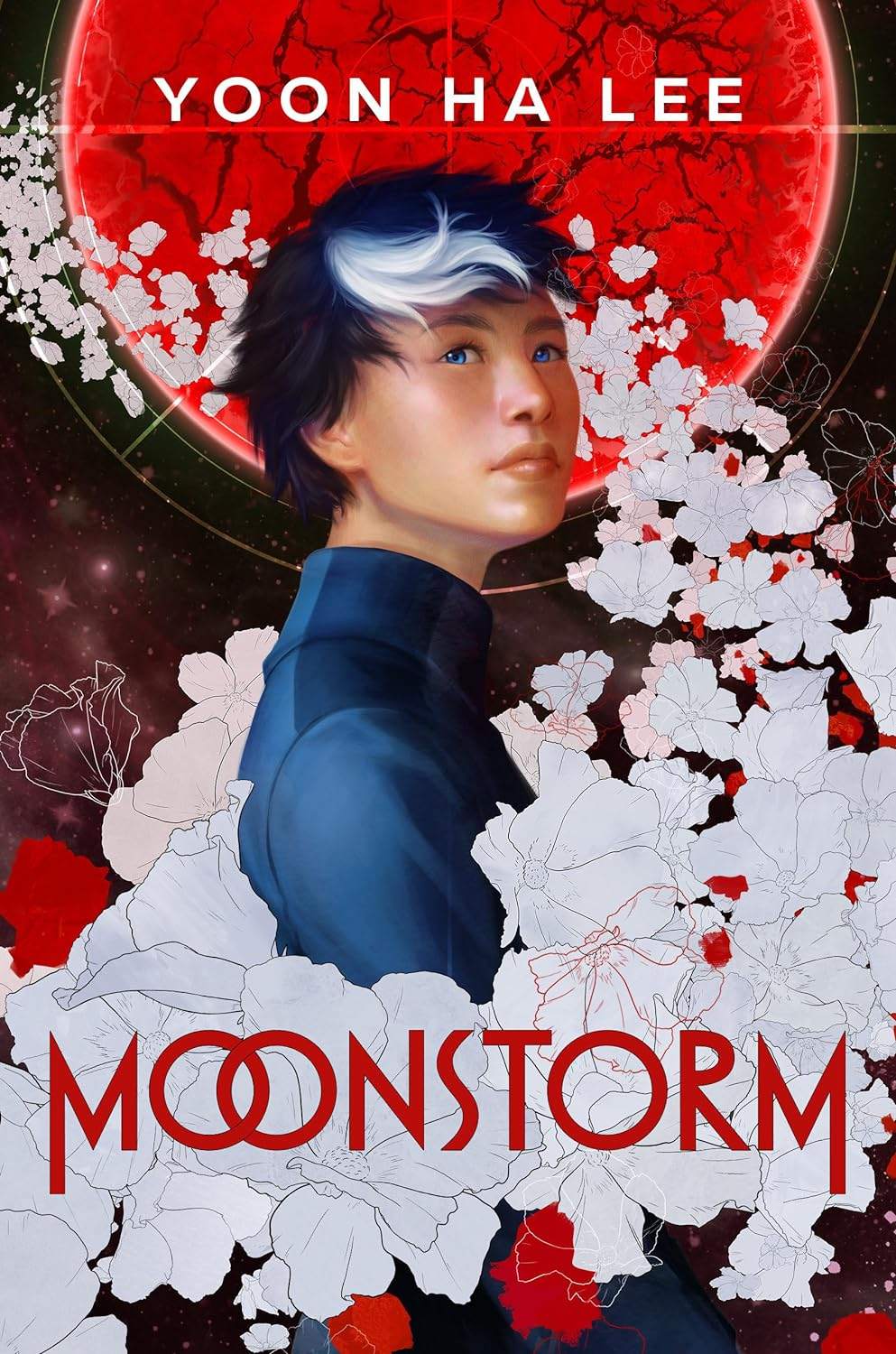
Challenge: Military Science Fiction
Book: Moonstorm – Yoon Ha Lee
Rating: 3.5/5
I love Yoon Ha Lee’s work. I also really admire Lee as a writer and a person. He pulled Moonstorm from consideration for the Lodestar Award due to the Worldcon Organisers using AI to vet panelist applications, which made me ask why I hadn’t read this book already. It still took me a while to start the series.
Moonstorm is about a teenage girl whose people are destroyed by a totalitarian space empire. She gets rescued by a mech pilot from this empire and is raised in a group home as a ward of the state. Unlike a lot of other YA protagonists, she does buy into the Empire’s propaganda. She wants to be a mech pilot more than anything, and is devoted to the Empress.
The Empress keeps all of her children safe, or so Hwa Young is desperate to believe. It is such a realistic scenario, but it can be uncomfortable experiencing the story from such a viewpoint. Lee does a great job balancing Hwa Young’s conflicting loyalties. He also makes Hwa Young feel like a real teenager, who has petty rivalries with her classmates. She isn’t a normal YA protagonist, and because of that it did take me a while to get into the story and come around to her.
Once I did get into the story, I had a lot of fun. The mechs are cool, the battles are interesting, and when Hwa Young does learn exactly what the empire is, and what the Empress is willing to do… that was brutal. Trying not to give too much away, but I’ll mention that Yoon Ha Lee does this thing in his military stories where characters are put into situations where there are no good choices. This story had a hell of a horrific situation at the end, and I’m eager to get to the sequel, Starstrike, and see the aftermath.
Whilst this was a good mecha story that I had a lot of fun with, I wasn’t able to really get into the story until the Mechs appeared, and I wanted more out of the supporting characters. Whilst I like what we’ve seen of the worldbuilding, I want more. I feel the bond between Hwa Young and her mech needs more development too. This is a fun book, but I haven’t fallen in love with the series yet. We’ll see if that changes in the next one.
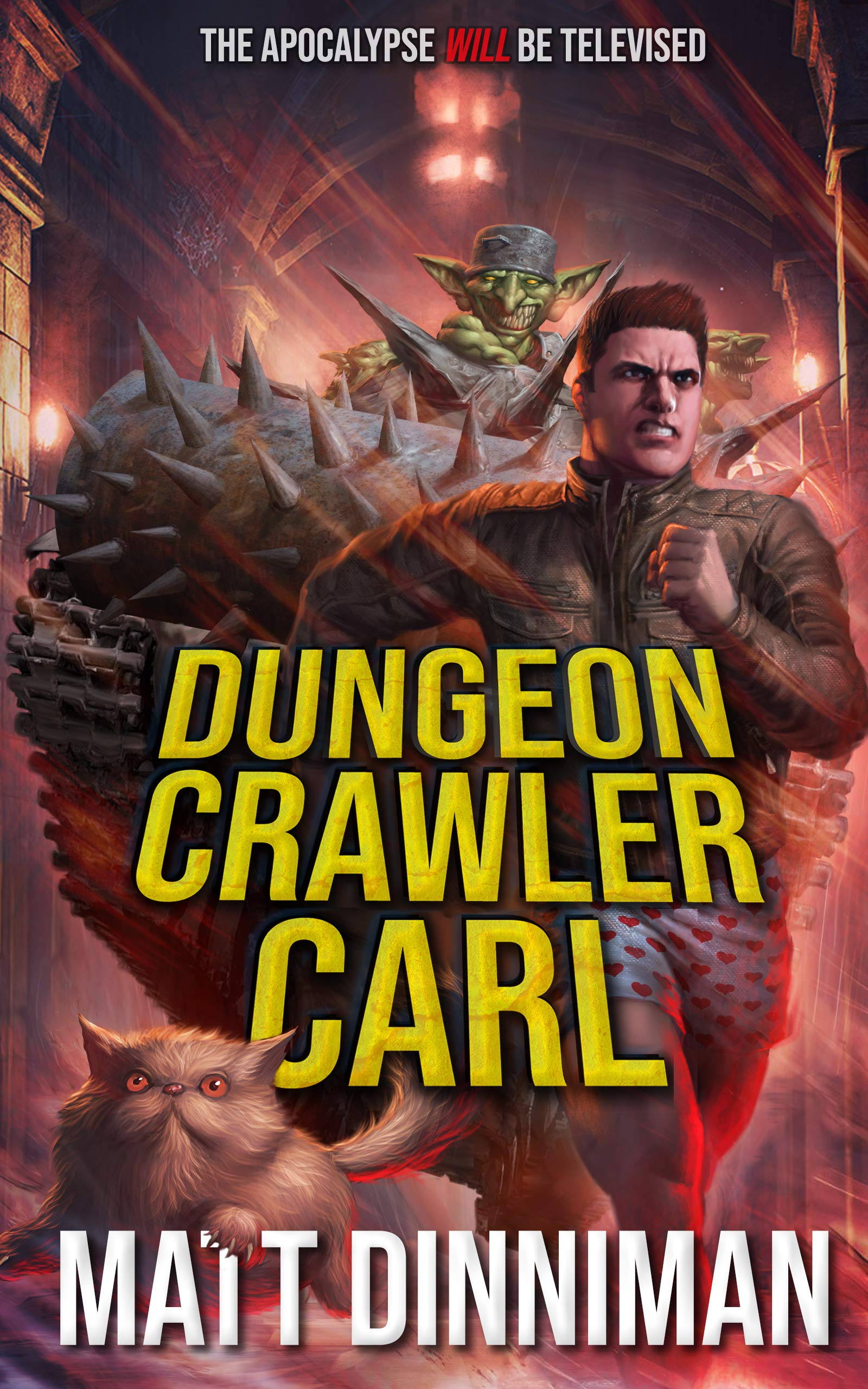
Challenge: Recommended by a Friend
Book: Dungeon Crawler Carl – Matt Dinniman
Rating: 5/5
At the start of this year, one of my friends recommended I give Dungeon Crawler Carl a try. She described the book as a guy getting put into an alien DnD like reality show with a talking cat, and it sounded pretty bonkers. I can’t remember the exact pitch she gave me, because other friends suggested the series to me afterwards. And then half of the internet recommended it to me. And then my husband heard about it on a podcast and really wanted to read it, so we got the first audiobook and listened to it together.
So there was a lot of hype around Dungeon Crawler Carl, and I feel it lived up to it. This first book in the series got me hooked and as of writing I have just finished book 5 and am eager to continue. Who’d have thought a story about a many with no pants, a talking cat and a ton of bombs on a post-apocalyptic alien TV show would be such a perfect story?
The story gets crazy as the game designers throw weirder challenges at the characters, who in turn come up with crazy plans to get through these challenges. There is a somewhat juvenile humour throughout the book, such as the AI running the game having a thing for Carl’s feet. Despite this, there is a lot of thoughtful social commentary. The more we learn about the wider universe outside the dungeon crawl world, the more anti-capitalism messages we get, and seeing Carl having to fight against a system that spans an entire galaxy rather than some big evil tyrant feels both futile and relatable. The way the series examines the way fans and corporations interact with this death game, from how they bend the rules to make more money or how they make themselves feel okay with watching people die in the first place is also done really well. At times I was reminded of themes that were examined in The Hunger Games books. Even though the two stories have death games as a spectacle, the difference in tone changes how the messages are delivered.
It’s hard to talk about just this first book, titled ‘Dungeon Crawler Carl’, without mentioning the series as a whole. The first book has Carl and Princess Donut (the cat) stay in the game for most of the story, and a lot of the themes of the series are only hinted at here, not getting fully explored until later books. The game itself is also much simpler, and it expands with each book. Dungeon Crawler Carl has to throw a lot of exposition at us to establish the game and the wider universe, but I feel it balances the amount of exposition and action well, and does a great job hooking us with this setting without overwhelming us. This book was published in 2020, and there are parts where you can see the impact of the pandemic. I got the feeling reading this that we have entered a new, post-pandemic era of literature, and I think that’s part of the reason why this book has been such a hit. Well, that and the talking cat.
Dungeon Crawler Carl is a very pulp inspired book. Sometimes it is a bit exposition heavy, sometimes the writing style feels a bit amateurish, and I don’t think the humor will work for everyone. However I think its a great start to a series that is very worth checking out. Also, the audiobook narrated by Jeff Hays is amazing.
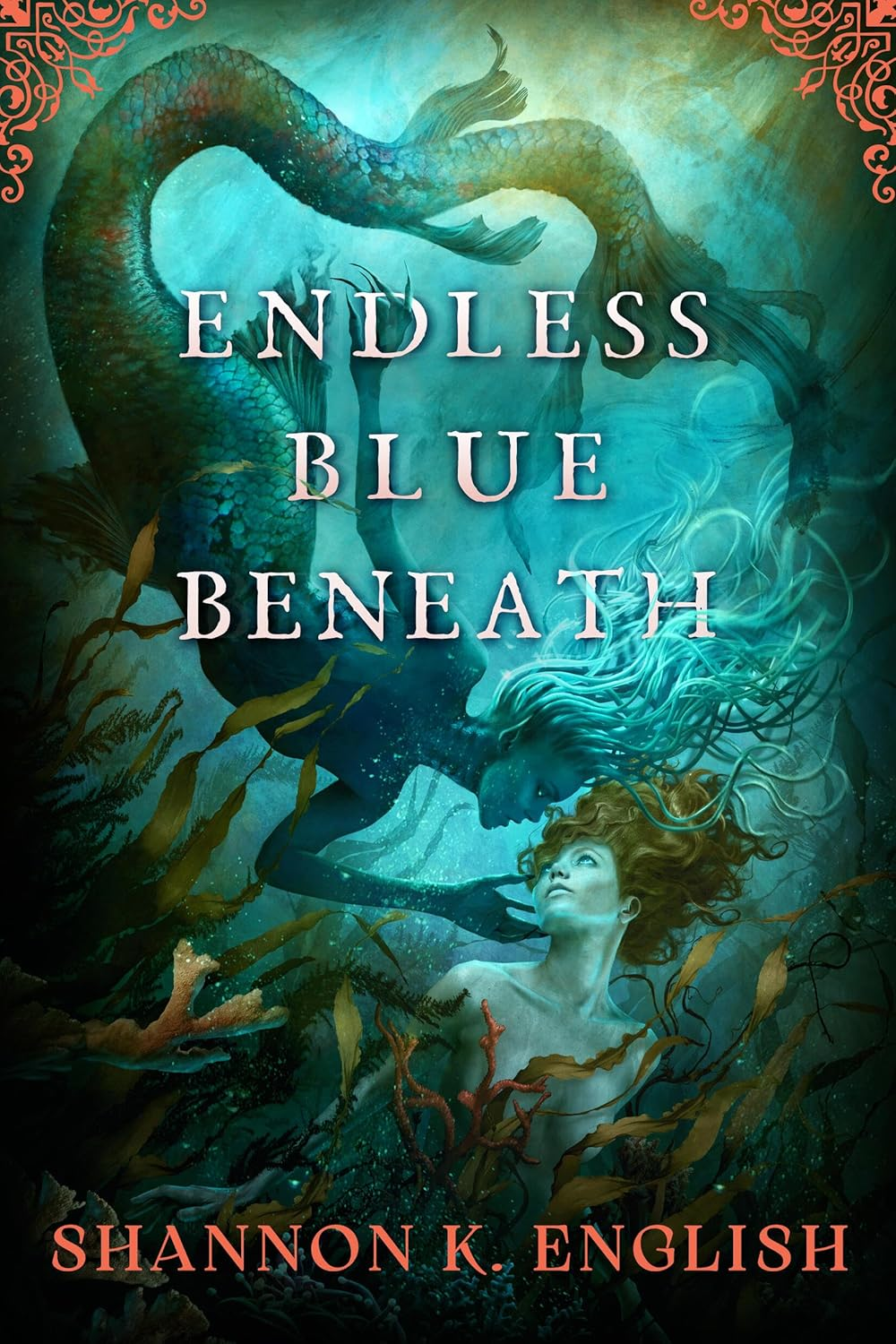
Challenge: Set in the Ocean/Under the Sea
Book: Endless Blue Beneath – Shannon K. English
Rating: 3.5/5
Now for a book that devastated me, and left me not quite sure how I feel about it. This is a sapphic mermaid romantasy, where the romance doesn’t come at the expense of the worldbuilding. This book has one of the best mermaid worlds I have ever seen, and I found the lore as captivating as the romance between Eppie and Marie.
It did take me a while to get into this book. Which I did expect, since romantasy is not my usual genre of choice. However I was also hesitant whilst reading because the mermaids in this world live in colonies ruled by a ‘mother’ who can brainwash the younger mermaids. Our protagonist Eppie is taken to a mermaid colony against her will and after initially resisting is bound by her new mermaid mother to love her sisters, and she shares a telepathic bond with the other mermaids who are older and more experienced than her and knowing that this was a romance I was worried where it was going. I’ve come across a lot of romantasy or romantic fantasy books where due to power dynamics or the magic that binds the couple together things can feel icky. Having a brainwashed protagonist in a relationship with a fellow colony member who could read her mind would have been terrible.
Fortunately Endless Blue Beneath does not go in that direction. Eppie’s love interest, Marie, is an orphaned mermaid from a destroyed colony who has suffered a head injury leaving her unable to use telepathy. Eppie’s feelings for Marie are not the result of Mother’s manipulation, nor are Marie’s feeling for her. And the struggle these two characters who have become somewhat used to telepathy have deciphering each other’s feelings is wonderful to read about. I really enjoyed this romance, with the way both of them were uncertain about how the other felt, and how Eppie navigated it after being rejected in a very homophobic way back when she was a human.
Also, the horrible implications of Mother’s bindings and the damage they do are examined. Eppie spends a lot of time trying to work out which of her feelings are genuine and which are manipulated, and she has conflicted thoughts about what has been done to her. The mermaid brainwashing also exists alongside human manipulation such as religious indoctrination, and I think it was handled very well.
I was unhappy about something that happened at the end of this book, and the way the fallout of this thing was portrayed. However this is the first book in the series, so depending on how the sequel handles things, I might retroactively come around to the ending. I’m still interested in seeing Eppie and Marie’s story continue. The sequel, Blue Skies Above, is expected to be released June 2027. I’m not sure if it’ll be a conclusion or if the series will continue, and I’m not sure which option I’d prefer. The score I gave this story might seem low, but even with how iffy I am on the ending, for someone who isn’t a huge romantasy or mermaid fan, I really liked this. If you love mermaids, you need to read this book.
Challenge: Alternate History
Book: The Years of Rice an Salt – Kim Stanley Robinson
Rating: 4/5
This is one of the most epic books I’ve read this year. It is also a Locus Award winner, so I could have put it on one of the other tiles of this card, but I have something else in mind for that one.
The Years of Rice and Salt is alternate history where the point of divergence is during the Black Plague in the year 1405. Instead of the plague killing a third of Europe’s population, it kills 99%. This leads to nearly all European culture being lost and history being shaped mostly by China and the Islamic World. We see this change unfold through ten different stories that span 700 years. The stories all take place in different times and have different styles, but they follow a group of characters who are reincarnating together. We see this group meeting in the Bardo (Buddhist afterlife/existence between reincarnations) where they rage at the unfairness of the world and try to keep each other together and improve their lives. In each story they are different characters, but the personalities are still recognizable, and their names always start with the same letter to make them easier to identify.
I had a lot of trouble getting into this book. The first story ‘Awake to Emptiness’ felt really slow for me, and knowing all the stories were going to be spread out over a long period of time made it hard to get excited about characters who I thought I wouldn’t be spending much time with. Once I hit the first scene in the Bardo and realised that they were going to keep reincarnating through the whole book I got hooked. That idea was mindblowing, and made me want to see what their next lives would be. It’s such a different way to think about characters, since they aren’t the same person, but they stay consistent so we still grow attached to them. Plus their struggle to improve the world begins to feel like the struggle of all of humanity. Robinson used the term ‘Dharmic History’ in one of the later chapters to describe viewing history as if there was a goal to build a kinder, more just world, and through focusing on this group of people we got a good story of the ‘Dharmic history’ version of the world.
Even though this book feels like a novel with one overarching story, it is still technically a collection of individual stories. In any such collection, some stories are better than others. Most were really strong, but the first one was a little slow, and the last two had some parts that dragged, despite being good overall. It wasn’t a page turner, but that’s alright. This book isn’t meant to be a page turner. I[p090908908ts meant to be a slow, thoughtful journey. I enjoyed making my way through this huge story, and will be thinking about it for a long time.
Challenge: Non Fiction
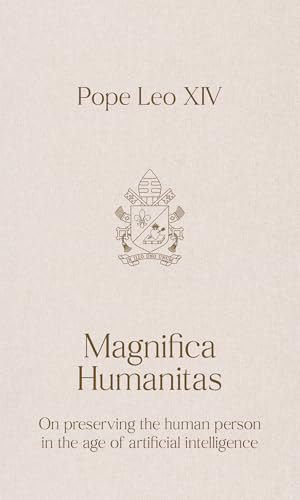
Book: Magnifica Humanitas – Pope Leo XIV
Rating: 4/5
I’m an atheist who grew up Catholic and now have negative views on the Church, so I’m surprised to find myself reviewing an essay by the Pope. I’d heard people talking about how the Pope had written an anti-AI thing, and considering how worried I am about the effects of generative AI, I was curious. Besides, I think its important to consider viewpoints from people that are different to you. I’m glad I did read this, because whilst I still disagree with Pope Leo about a lot of things, including things in this paper, I found this article insightful and well worth the read.
In Magnifica Humanias, the Pope compares AI technology to the Tower of Babel. Here humanity building Babel symbolises a vanity project. Something people did to guarantee power and ‘make a name for themselves’. It is a project driven by a uniform population with one clear goal in mind. And it fails. Pope Leo contrasts Babel to the rebuilding of Jerusalem in the Book of Nehemiah. This project was completed by a vulnerable community with a range of different needs. Every family had their own section of the wall to build, and together they make something that protects their community. Its a build with human needs in mind, made by diverse group with complex needs, and it results in humanity coming together, rather than being scattered.
I guess I went into this expecting to read a lot about how soulless algorithms can’t replace the human spirit. Instead the Pope spends most of this essay examining the ways AI technology and the economic and cultural forces that shape its creation and use undermine our ability to make a functional community that meets human needs. He examines the injustice in treating a human worker as a cost of production rather than a person who needs to earn enough to live, and the ways AI technology increases this dehumanisation. He examines how this technology impacts the way we see war, how it effects education, and how it can turn information and access to information into a means of control. He frames AI as a tool. Something not inherently evil, but not neutral, since it is influenced by those who create it, those who fund it, and those who decide how it gets used.
Magnifica Humanitas provides a lot of interesting things to consider about how we run our society. Not just how we use AI.
Of course I can’t go an entire review without voicing my objections to some religious aspects of this work, even though overall I think this piece is a great example of the good side of religion. And yes, I know it sounds stupid to complain about Catholic beliefs in an essay written by the Pope. But despite this being a non-fiction piece, the purpose of this post is for me to give my opinion on books, so I should articulate why I haven’t given it five stars. Basically I find that the core message of preserving human dignity falls flat coming from an organisation that values upholding the importance of the gender binary over the lives of transgender people, or that talks about preserving the family whilst diminishing the legitimacy of families consisting of same-sex parents. Pope Leo even manages to slip in the Church’s ‘abortion is murder’ stance in this paper about AI. Also there is speculation that parts of this paper were written by AI, though I am not entirely convinced of the claim. See this Snopes article HERE for more info.
Anyway, I’m really impressed by this essay. I think it makes a lot of great points, and Pope Leo envisions a society that sees human dignity as its core goal, and I think that is something we should strive for. Just keep in mind that the Pope is indeed still Catholic.
_________________________________________________
Thanks for reading my latest batch of book reviews. The card is more than half full, so I think think the next review page will be ready soon. Until then, happy reading everyone.
~ Jayde

